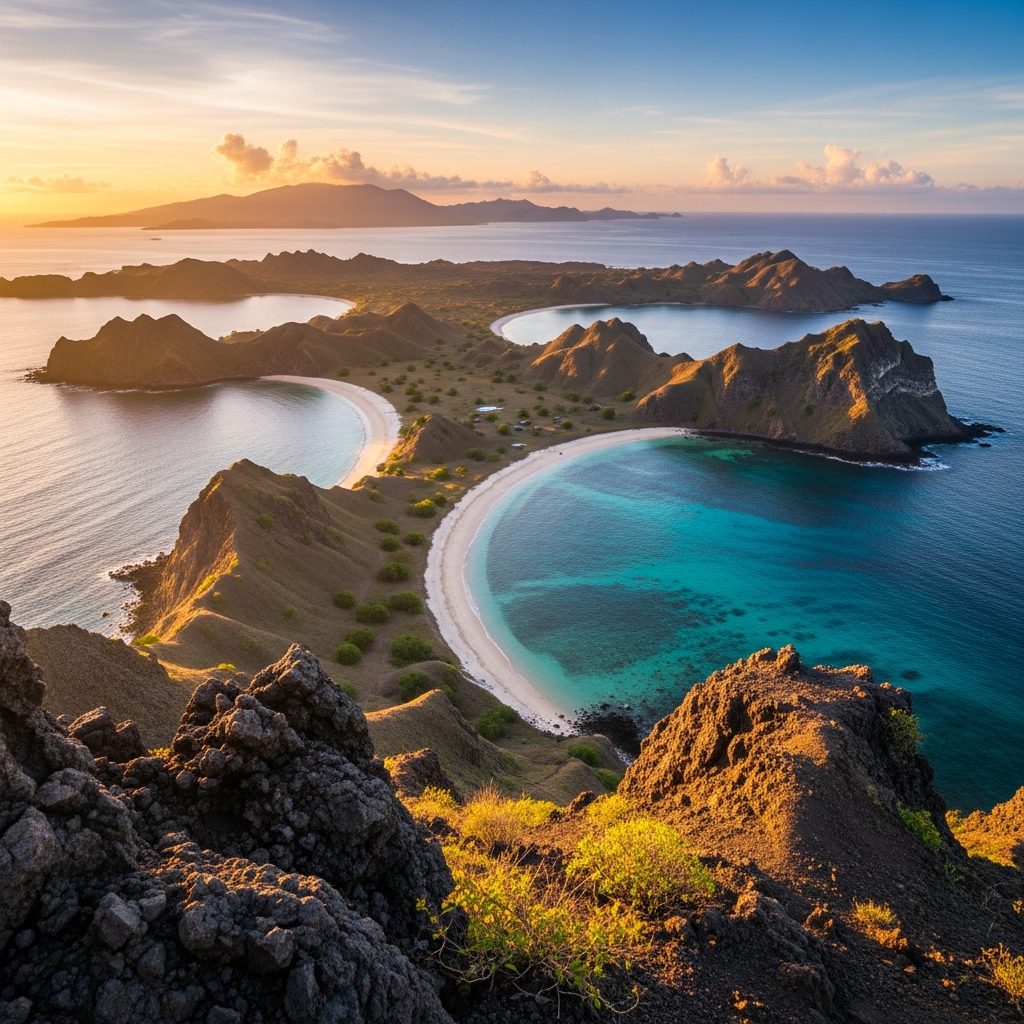
Komodo’s Most Iconic Viewpoint
Padar Island
Padar Island is the third-largest island in Komodo National Park and home to one of the most photographed viewpoints in all of Indonesia. The short but steep trek to the summit rewards hikers with a b
About Padar Island
Padar Island is the third-largest island in Komodo National Park and home to one of the most photographed viewpoints in all of Indonesia. The short but steep trek to the summit rewards hikers with a breathtaking 360-degree panorama of three distinctly colored bays — turquoise, pink, and black sand — framed by dramatic ridgelines that seem to fold into the sea.
Located between Komodo Island and Rinca Island, Padar is a mandatory stop on virtually every Komodo liveaboard itinerary. The island was designated as a protected area within the UNESCO World Heritage Site and has become a symbol of Indonesian natural beauty, featured in countless travel publications and social media posts.
The best time to visit Padar Island is at sunrise, when the low-angle light creates dramatic shadows across the ridges and bays. Liveaboard guests have the advantage of anchoring nearby overnight and arriving at the trailhead before day-trip boats from Labuan Bajo, enjoying the summit views in relative solitude.
Highlights & Activities
Sunrise Summit Trek
A 30-45 minute climb up wooden steps and rocky trails to the iconic viewpoint. Moderate difficulty suitable for most fitness levels. Arrive at dawn for the most spectacular light conditions and uncrowded views.
Three-Color Bays
Padar’s unique geography creates three adjacent bays with different sand colors — white, pink, and volcanic black. Each bay is framed by green hills and turquoise water, creating a natural masterpiece visible from the summit.
Snorkeling at Padar Beach
The sheltered bays around Padar offer calm snorkeling conditions with healthy coral reefs and abundant marine life. The Long Beach area is particularly good for spotting reef sharks, rays, and schools of tropical fish.
Photography Paradise
Padar Island offers some of the most dramatic landscape photography opportunities in Southeast Asia. Wide-angle lenses capture the sweeping bays, while telephoto lenses reveal details in the ridgelines and coastline.
What to Do at Padar Island
The primary activity at Padar Island is the sunrise summit trek. The trail begins at a small jetty on the eastern coast and climbs approximately 200 meters over rough terrain. While not technically difficult, the trail is steep in places and can be slippery, so proper footwear is recommended. Most hikers complete the round trip in 60-90 minutes.
After the trek, many liveaboard itineraries include snorkeling in the calm waters around Padar’s bays. The Long Beach area on the northern side offers excellent visibility and encounters with reef sharks, sea turtles, and colorful reef fish. The beach itself is a beautiful spot for swimming and relaxation.
Photography enthusiasts often request extended time at Padar to capture changing light conditions. The summit viewpoint offers spectacular photo opportunities throughout the day, but the golden hour light at sunrise and sunset creates the most dramatic images.
How to Get to Padar Island
Padar Island is located approximately 3 hours by liveaboard from Labuan Bajo harbor, making it accessible on all multi-day itineraries. Most 2-day, 3-day, and 4-day liveaboard trips include Padar as the first or second stop. The island has no permanent facilities or accommodation — visiting by liveaboard is the most comfortable and practical way to experience it.
Frequently Asked Questions
How long is the hike to Padar Island viewpoint?
The trek to the summit viewpoint takes 30-45 minutes each way, depending on fitness level. The total elevation gain is approximately 200 meters. The trail includes wooden steps, rocky sections, and some steep climbs. Moderate fitness is required.
When is the best time to visit Padar Island?
The best time is at sunrise for the most dramatic light and fewest crowds. Dry season (April-November) offers clear skies and the best visibility. Liveaboard guests can arrive before day-trip boats for a more peaceful experience.
Can you swim at Padar Island?
Yes, the bays around Padar have beautiful beaches suitable for swimming and snorkeling. The water is calm and clear, particularly in the sheltered northern bays. Pink Beach (Long Pink Beach) near Padar is a popular snorkeling spot.
Visit Padar Island on Your Liveaboard
Include Padar Island in your custom Komodo liveaboard itinerary. Contact our team to design the perfect sailing route.
Best Time to Visit Padar Island
The optimal period to visit Padar Island typically runs from April through November, when the dry season brings calm seas, excellent visibility, and perfect conditions for diving and snorkeling. During these months, the water temperature hovers around 28-29°C (82-84°F), and you’ll experience minimal rainfall and stable weather patterns ideal for liveaboard adventures.
July and August are peak season, offering the best visibility and most stable conditions, though these months also attract more visitors. For a more exclusive experience with fewer crowds, consider visiting in April-May or September-October, when conditions remain excellent but the tourism numbers decrease considerably. December through March represents the wet season with higher rainfall and rougher sea conditions, making some activities unpredictable.
How to Get There
International Access: Most visitors fly into Mutiara Adisutjipto International Airport in Yogyakarta or Ngurah Rai International Airport in Bali, both major hubs with connections to major cities worldwide. From either airport, you’ll connect via a domestic flight to Komodo Airport (LBJ) in Labuan Bajo, approximately 1.5 hours from Yogyakarta and 2 hours from Bali.
From Labuan Bajo: Upon arrival at Komodo Airport, we arrange ground transportation to our dive center in Labuan Bajo town. Most liveaboard departures occur from the Labuan Bajo harbor. Our team will coordinate all transfer logistics, ensuring a seamless journey from your arrival to boarding your vessel. The drive from the airport to town takes approximately 30 minutes.
Liveaboard Embarkation: Padar Island is exclusively accessible via liveaboard diving expeditions. We provide comprehensive briefing and equipment checks the day before departure, allowing you to familiarize yourself with the vessel, meet your crew, and prepare for the adventure ahead. Your first dive typically occurs the following morning after a full night’s rest aboard.
What to Expect
Luxury Accommodation: Our liveaboard vessels provide accommodations ranging from comfortable cabins to premium suites, each equipped with en-suite bathrooms, air conditioning, and modern amenities. Spacious communal areas include sun decks, dining rooms, and relaxation lounges where you can socialize with fellow divers or unwind between dives.
Daily Dive Schedule: Expect 3-4 dives per day, typically scheduled for early morning, mid-morning, afternoon, and occasionally a night dive. Each dive is guided by experienced professionals who possess intimate knowledge of the local underwater topography and marine life. All equipment is provided and meticulously maintained, though you’re welcome to bring personal gear.
Culinary Experience: Our onboard chef prepares international and Indonesian cuisine daily, accommodating dietary requirements and preferences. Fresh seafood, tropical fruits, and carefully selected ingredients ensure every meal is a memorable experience. Unlimited beverages, including premium coffee and tea, are available throughout the day.
Marine Biodiversity: Padar Island showcases Indonesia’s remarkable underwater ecosystems. You’ll encounter vibrant coral formations, schools of tropical fish, and depending on the location, encounters with manta rays, sharks, sea turtles, and countless macro species. Each dive presents new discoveries in this globally significant marine reserve.
Photography Tips for Padar Island
Equipment Recommendations: A quality underwater camera system is essential. DSLR or mirrorless cameras with underwater housings provide professional results, while compact cameras and action cameras offer convenient alternatives. Bring redundant backup batteries and memory cards, as opportunities for charging are limited aboard the vessel.
Lighting Considerations: The variable visibility around Padar Island demands attention to lighting. Bring a primary dive light and consider a focus light for macro photography. Wide-angle lenses with supplemental lighting excel at capturing reef scenes and larger animals, while macro lenses reveal intricate details of smaller species and coral formations.
Composition Techniques: Utilize the rule of thirds to create compelling compositions. Photograph subjects with the reef or blue water as backdrop for context. During current dives, position yourself above and behind subjects to capture their natural behavior. Early morning and late afternoon dives often provide the most flattering light for color saturation and detail.
Safety First: Always prioritize dive safety over photography. Maintain neutral buoyancy to avoid contact with the reef. Never chase animals or manipulate the environment for better shots. Your dive guide’s instructions supersede photography opportunities—they know the site and conditions intimately.
Frequently Asked Questions
What is the visibility like at Padar Island?
Visibility typically ranges from 15-40 meters, depending on season, location, and recent weather conditions. The dry season (April-November) generally provides superior visibility, while current patterns can occasionally reduce it temporarily. Our guides continuously monitor and select dive sites for optimal conditions.
What certification levels are required?
Most dives require PADI Open Water certification or equivalent. Some advanced sites may recommend Advanced Open Water certification. Absolute beginners can participate in Discover Scuba Diving programs with instructor supervision. All divers must present valid certification cards and demonstrate competent skills during initial briefings.
What is included in the liveaboard package?
Our liveaboard packages include accommodation, all meals and beverages, diving (typically 3-4 dives daily), professional guides, equipment rental (if needed), and all necessary permits for the marine reserve. Personal travel insurance, gratuities, and specialized photographic services are additional.
What marine life might we encounter?
Padar Island hosts exceptional biodiversity including reef sharks, manta rays, sea turtles, groupers, fusiliers, schooling jacks, and countless macro species. Seasonal variations mean different species appear at different times. Our guides provide detailed briefing on probable encounters before each dive.
What should I pack for a liveaboard expedition?
Pack light, quick-dry clothing suitable for tropical climate, personal medications, sun protection (reef-safe sunscreen), a light jacket for air-conditioned cabins, and toiletries. Bring personal diving equipment if preferred, though all standard gear is provided. Limited luggage space makes compact packing essential.
How are medical emergencies handled?
Our vessels carry comprehensive medical kits and oxygen supplies. All guides are trained in first aid and emergency procedures. Labuan Bajo maintains adequate medical facilities, and helicopter evacuation services are available if critical emergencies occur. We strongly recommend comprehensive travel and diving insurance.
What is the physical fitness requirement?
While diving doesn’t require exceptional fitness, you should be comfortable with physical activity and able to carry equipment weighing 10-20kg. Some dives involve surface swimming and moderate currents. If you have medical conditions or health concerns, consult your physician and notify our team before departure.
Can non-divers participate?
Yes! Non-divers can enjoy the liveaboard experience with snorkeling opportunities, relaxation, photography from the surface, and island exploration. Many expeditions offer Discover Scuba programs allowing non-certified individuals to experience diving with instruction. Contact us to discuss options for mixed groups.
What environmental conservation practices are used?
We’re committed to environmental stewardship. All operators follow strict no-touch, no-feed protocols. We use reef-safe products exclusively, practice proper buoyancy to avoid reef contact, and support local conservation initiatives. Our practices align with UNESCO World Heritage Site requirements protecting these exceptional marine ecosystems.
Nearby Destinations to Explore
The Komodo National Park encompasses numerous extraordinary dive sites within easy reach. Consider extending your adventure by combining Padar Island with nearby destinations in the same expedition or consecutive trips:
- Explore Pink Beach – Another spectacular site offering unique marine life and geological formations
- Discover Komodo Island – Complementary dive experiences within the national park
- View All Destination Pages – Complete guide to Komodo National Park dive sites
Recommended Itineraries
We offer curated expedition itineraries specifically designed to include Padar Island alongside complementary dive sites, maximizing your experience within the Komodo National Park:
- View Our Diving Packages – Browse available itineraries and book your adventure
- Check Pricing Information – Transparent pricing for all liveaboard durations
Ready to Experience Padar Island?
Join us for an unforgettable diving expedition to Padar Island. Contact our team today to discuss your preferences, answer questions, and secure your spot on an upcoming liveaboard adventure. We’re committed to creating memories that last a lifetime.